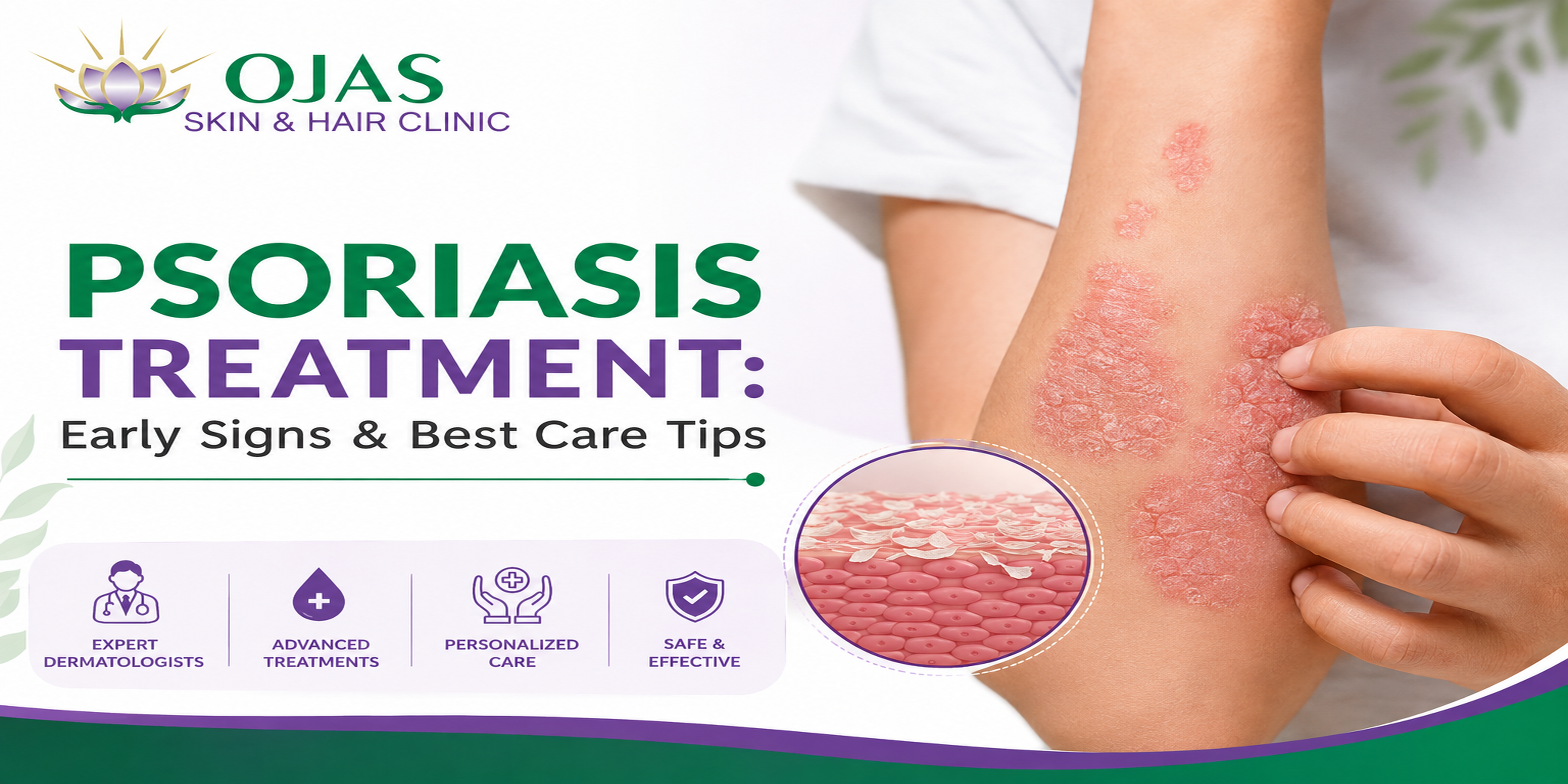
Psoriasis is a chronic inflammatory skin condition that can cause dry, thickened, itchy and scaly patches on different parts of the body. It may affect the elbows, knees, scalp, lower back, nails and other areas. Because psoriasis can sometimes resemble eczema, fungal infections or other skin conditions, an accurate diagnosis by a dermatologist is important.
The good news is that psoriasis can often be managed effectively with the right treatment and consistent skin care. Treatment is not the same for everyone. A dermatologist considers the type and severity of psoriasis, the areas affected, symptoms, overall health and how the condition is affecting your daily life.
If you are looking for psoriasis treatment in Pune, understanding the early signs, common triggers, treatment options and daily care measures can help you take the right next step.
At Ojas Skin & Hair Clinic, dermatological care is provided for psoriasis and other chronic skin concerns with an individualized approach.
Early recognition, accurate diagnosis and consistent treatment can make psoriasis easier to manage over the long term.
What Is Psoriasis?
Psoriasis is a chronic inflammatory skin condition associated with an abnormal immune response that causes skin cells to build up faster than usual. This can result in thickened, raised and scaly patches.
Psoriasis is not contagious. You cannot catch it through touching, sharing personal items or being close to someone who has the condition.
Symptoms may remain under control for some time and then become more noticeable during a flare-up. The pattern varies from person to person.
Psoriasis can affect more than just the skin. Some people may also experience nail changes or develop psoriatic arthritis, which can cause joint pain, swelling and stiffness.
The condition may also affect a person's confidence, sleep and quality of life, particularly when symptoms are visible or difficult to control.
What Are the Early Signs of Psoriasis?
Recognizing possible early symptoms can help you seek professional evaluation sooner. Psoriasis does not look exactly the same in every person, and its appearance can vary depending on skin tone and the type of psoriasis.
Dry, Raised and Scaly Patches
One of the most common signs of psoriasis is a patch of skin that becomes dry, thick, raised and scaly.
The appearance can vary. On lighter skin, psoriasis may appear pink or red with silvery-white scale. On darker skin, it may appear darker, greyish, purple or brown and can sometimes be more difficult to recognize.
The patches may occur on the elbows, knees, scalp, trunk or other areas of the body.
Persistent patches that repeatedly return should not automatically be assumed to be psoriasis. Conditions such as eczema, fungal infections and other inflammatory skin disorders can have similar features.
Persistent Itching, Burning or Irritation
Psoriasis may cause itching, burning, soreness or skin tightness.
For some people, itching is mild. For others, it can interfere with sleep, work or everyday activities. Repeated scratching may further irritate the skin and can sometimes contribute to new psoriasis developing at sites of skin injury.
If itching continues despite basic moisturising and skincare, a dermatologist can help identify the underlying cause.
Scalp Scaling
Scalp psoriasis can sometimes look similar to severe dandruff.
You may notice:
- Thick scaling on the scalp
- Persistent flakes
- Red or darker patches beneath the scale
- Itching or irritation
- Scaling around the hairline or behind the ears
If scalp scaling continues despite regular dandruff care, it is worth having the scalp examined by a dermatologist.
Scalp psoriasis may require a different treatment approach from psoriasis affecting other parts of the body.
Nail Changes
Psoriasis can affect fingernails and toenails.
Possible changes include:
- Small pits or dents in the nails
- Thickening
- Discoloration
- Rough or crumbly nails
- Separation of the nail from the nail bed
Nail changes can have several causes, so they should not automatically be diagnosed as psoriasis without professional assessment.
Joint Pain and Stiffness
Psoriasis can sometimes be associated with psoriatic arthritis.
Pay attention to recurring:
- Joint pain
- Swelling
- Morning stiffness
- Tenderness in fingers or toes
- Swelling of an entire finger or toe
- Heel pain
These symptoms should be discussed with a healthcare professional. Early evaluation of possible psoriatic arthritis is important because untreated inflammatory joint disease can progress.
What Causes Psoriasis and Its Flare-Ups?
There is no single cause of psoriasis. Genetics and immune-system activity both play a role, while environmental and lifestyle factors can contribute to the development or worsening of symptoms.
Common triggers can include:
- Stress
- Skin injuries such as cuts or scratches
- Certain infections
- Smoking
- Heavy alcohol consumption
- Cold or dry weather
- Certain medicines
- Other individual triggers
Triggers are different for different people. For example, one person may notice flare-ups during periods of stress while another may notice a seasonal pattern.
Keeping a simple record of flare-ups can help you identify possible patterns. Note when symptoms become worse, any recent illness, major stress, changes in medication, skin injuries or changes in weather.
However, you should not stop a prescribed medicine on your own because you suspect it is contributing to a flare-up. Discuss medication-related concerns with the doctor who prescribed it or your dermatologist.
How Is Psoriasis Diagnosed?
Psoriasis is usually diagnosed through a clinical examination.
A dermatologist may examine your:
- Skin
- Scalp
- Fingernails and toenails
- Joints
Your doctor may also ask about your symptoms, family history, recent illness, stress and medicines.
In some cases, a small skin sample may be examined under a microscope if the diagnosis is uncertain.
This is one reason why self-diagnosing persistent skin patches can be problematic. Several skin conditions can look similar, but their treatments may be completely different.
A proper diagnosis helps the dermatologist select an appropriate treatment plan.
Psoriasis Treatment Options
There is no single psoriasis treatment that works for every patient. Treatment depends on the type of psoriasis, severity, affected areas, symptoms, previous treatments and overall health.
Topical Treatments
For mild or localized psoriasis, treatment applied directly to the affected skin is commonly used.
Depending on the individual case, a dermatologist may prescribe medicines such as corticosteroids, vitamin D-related treatments or other topical medicines.
Moisturisers and emollients can also help reduce dryness and support the skin barrier.
Prescription treatments should be used according to medical advice. Using strong steroid creams or other prescription medicines without guidance can cause unwanted effects.
Phototherapy
Phototherapy uses controlled ultraviolet light under medical supervision.
It may be considered when psoriasis affects larger areas or when topical treatment alone is not sufficient.
The type and frequency of phototherapy depend on the patient's condition. It should be performed according to a dermatologist's recommendations rather than through uncontrolled exposure to sunlight or artificial UV sources.
Oral and Injectable Treatments
Moderate-to-severe psoriasis may sometimes require medicines that work throughout the body.
Depending on the patient's situation, treatment may include oral medicines, injectable biologic medicines or other systemic therapies.
These treatments require medical evaluation and monitoring because the choice of medicine depends on several factors, including other health conditions, medications and the severity of psoriasis.
Combination Treatment
Some people need more than one treatment approach.
For example, a dermatologist may combine topical treatment with phototherapy or systemic treatment when appropriate.
The objective is not simply to treat visible patches temporarily. A good treatment plan aims to control symptoms, reduce flare-ups and improve the person's overall quality of life. Dermatologists may adjust treatment over time depending on how the skin responds.
Best Daily Care Tips for Psoriasis
Medical treatment is an important part of psoriasis management, but everyday skincare can also make a difference.
Moisturise Regularly
Dry skin can increase discomfort and make psoriasis feel worse.
Use a suitable moisturiser regularly, particularly after bathing. Your dermatologist can recommend products based on your skin condition and treatment plan.
Avoid Scratching
Scratching can irritate the skin and may contribute to new lesions in areas that have been injured.
Keep your nails trimmed and try to manage itching with appropriate treatment rather than repeatedly scratching the affected area.
Use Gentle Skin Care
Avoid unnecessarily harsh cleansers, excessive rubbing and very hot showers.
Gentle cleansing and regular moisturisation can help maintain the skin barrier.
Protect Your Skin From Injury
Cuts, scratches, sunburn and other skin injuries can sometimes trigger psoriasis lesions.
Take reasonable precautions during shaving, exercise, household work and other activities where your skin may be injured.
Identify Personal Triggers
Not every commonly reported trigger affects every person.
Instead of eliminating foods or changing your lifestyle based on internet claims, look for patterns that consistently occur before your flare-ups.
A simple symptom diary can be useful when discussing your condition with your dermatologist.
Manage Stress and Maintain Healthy Habits
Stress is a common psoriasis trigger for some people. Regular physical activity, adequate sleep and practical stress-management strategies can support general wellbeing.
Avoid smoking and limit alcohol consumption, particularly if these appear to worsen your symptoms.
Follow Your Prescribed Treatment
Psoriasis often requires long-term management.
Do not stop prescription treatment suddenly, change the dose yourself or repeatedly switch between unverified home remedies.
If your current treatment is not working well, speak with your dermatologist. Your treatment plan may need to be adjusted.
Psoriasis on the Scalp, Nails and Sensitive Areas
Psoriasis does not affect every part of the body in the same way.
Scalp psoriasis may need specific medicines or formulations designed for the scalp. Nail psoriasis can be more difficult to manage and may require a longer treatment period.
Psoriasis can also affect sensitive areas such as the face, genitals or skin folds. Because these areas have thinner or more sensitive skin, treatment should be selected carefully by a dermatologist.
If psoriasis develops in a new area or existing treatment is no longer controlling symptoms, tell your dermatologist rather than simply applying the same medication everywhere.
When Should You See a Dermatologist?
Consider consulting a dermatologist if you have:
- Persistent scaly or raised skin patches
- Repeated unexplained skin flare-ups
- Severe itching or irritation
- Persistent scalp scaling
- Unexplained nail changes
- Symptoms that do not improve with routine skincare
- Psoriasis affecting a large area
- Symptoms affecting sleep or daily activities
- Recurring joint pain, swelling or stiffness
You should seek urgent medical attention if psoriasis becomes suddenly widespread with severe redness, peeling, fever, chills or feeling seriously unwell. Rare forms of psoriasis can require immediate medical care.
Psoriasis Treatment in Pune: What to Expect
If you are searching for psoriasis treatment in Pune, the first step should be a proper dermatological assessment rather than choosing treatment based only on photographs or online information.
During a consultation, a dermatologist may evaluate the skin, scalp and nails, discuss your symptoms and identify possible triggers.
The treatment plan may then be based on:
- Type of psoriasis
- Severity of symptoms
- Areas affected
- Previous treatments
- Nail or scalp involvement
- Possible joint symptoms
- Other health conditions
- Current medicines
- Effect on your quality of life
This personalized approach is important because psoriasis can behave differently from one individual to another.
Why Choose Ojas Skin & Hair Clinic?
Ojas Skin & Hair Clinic provides dermatology care in Hadapsar, Pune, under the guidance of Dr. Purvaa Chavaan.
The clinic provides personalized dermatological consultation for skin and hair concerns, including psoriasis and other chronic skin conditions.
Patients can visit the clinic'sGadital or Malwadi, Hadapsar locations for consultation.
If you are looking for a skin specialist in Hadapsar, dermatologist for psoriasis, or skin clinic in Pune, you can learn more about the clinic and its dermatology services through the official website.
Medical information: This article is intended for general educational purposes and does not replace an in-person medical consultation. Persistent, worsening or unexplained skin symptoms should be evaluated by a qualified dermatologist.
Frequently Asked Questions About Psoriasis
Can psoriasis be completely cured?
Psoriasis is generally a chronic condition and there is currently no guaranteed permanent cure. However, appropriate treatment can control symptoms, reduce flare-ups and help many people achieve clearer and more comfortable skin.
Is psoriasis contagious?
No. Psoriasis is not contagious and cannot be transmitted through touching, hugging, sharing personal items or other normal physical contact.
What are the first signs of psoriasis?
Early signs can include dry, thickened, raised or scaly patches, itching, irritation and recurring areas of inflammation. Scalp scaling, nail changes or joint symptoms may also occur.
Can psoriasis affect the scalp?
Yes. Scalp psoriasis can cause persistent scaling, itching and thicker plaques on the scalp or around the hairline. It can sometimes resemble severe dandruff, so persistent symptoms should be evaluated by a dermatologist.
Can psoriasis affect the nails?
Yes. Nail psoriasis may cause pits, ridges, discoloration, thickening, crumbling or separation of the nail from the nail bed. Other nail conditions can cause similar changes, so professional diagnosis is recommended.
What can trigger a psoriasis flare-up?
Common triggers can include stress, skin injuries, certain infections, smoking, heavy alcohol consumption, cold or dry weather and certain medicines. Triggers vary between individuals.
What is the best treatment for psoriasis?
There is no single best treatment for everyone. Treatment depends on the type, severity and location of psoriasis and may include topical medicines, moisturisers, phototherapy, oral medicines, biologic medicines or combinations of treatments.
Should I stop my psoriasis medicine when symptoms improve?
Do not stop or change prescribed medication without speaking with your dermatologist. Psoriasis often requires ongoing management, and your doctor can advise whether treatment should be continued, reduced or changed.
Can psoriasis cause joint pain?
Yes. Some people with psoriasis develop psoriatic arthritis, which can cause joint pain, swelling and stiffness. Recurring joint symptoms should be discussed with a healthcare professional.
When should I see a dermatologist for psoriasis?
You should consider seeing a dermatologist when skin patches are persistent or recurring, symptoms are difficult to control, scalp or nail changes develop, or psoriasis begins affecting your daily life. Joint pain, swelling or stiffness alongside psoriasis symptoms should also be medically evaluated.
Take the First Step Toward Better Psoriasis Care
Psoriasis can be a long-term condition, but appropriate diagnosis, treatment and daily skin care can make it easier to manage.
If you notice persistent scaling, recurring patches, unexplained nail changes, scalp irritation or possible joint symptoms, avoid relying on self-diagnosis. A dermatologist can determine whether the symptoms are consistent with psoriasis and recommend a treatment approach suited to your individual condition.
If you are searching for psoriasis treatment in Pune, a dermatologist for psoriasis, chronic skin treatment, or a skin specialist in Hadapsar, professional evaluation can be an important first step toward better long-term skin care.
Ojas Skin & Hair Clinic provides personalized dermatological consultation in Hadapsar, Pune, under the guidance of Dr. Purvaa Chavaan.
Book Your Appointment Today
If you are experiencing persistent skin patches, itching, scaling or other symptoms that may be related to psoriasis, consult a qualified dermatologist for an appropriate evaluation and treatment plan.
Visit Our Website
Clinic URL:
https://www.ojashairandskin.com/
Contact us today –
+91 91752 73123
.