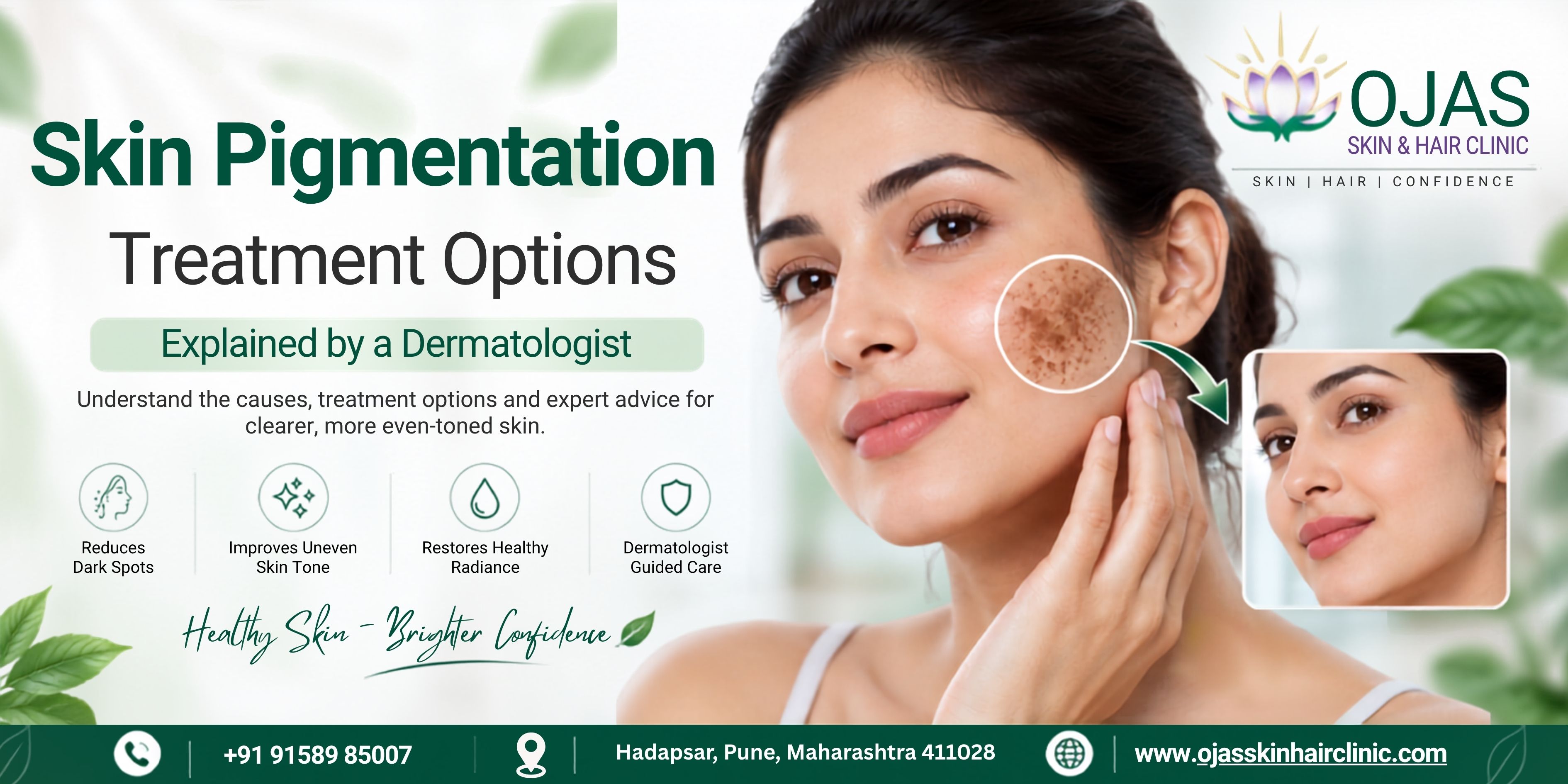
Uneven skin tone, dark patches and persistent spots are common skin concerns. They may appear on the face, neck, hands or other areas of the body and can develop for different reasons, including sun exposure, acne, inflammation, hormonal changes, certain medications and underlying skin conditions.
Although pigmentation can look like a cosmetic concern, the correct treatment depends on why the pigmentation developed, how deeply the pigment is present in the skin and what type of pigmentation it is. Using the wrong product or procedure may irritate the skin and sometimes make dark patches more noticeable.
If you are looking for pigmentation treatment in Hadapsar or searching for a dermatologist in Pune, a professional skin assessment can help identify the likely cause and determine an appropriate treatment plan.
What Is Skin Pigmentation?
Skin pigmentation refers to the colour of the skin, which is primarily influenced by melanin produced by specialised cells called melanocytes. When melanin production or distribution increases in certain areas, the skin may develop darker patches or spots. This is commonly referred to as hyperpigmentation.
Pigmentation is not one single condition. Common causes include:
- Melasma
- Post-inflammatory hyperpigmentation after acne or irritation
- Sun-related pigmentation
- Freckles and certain types of lentigines
- Pigmentation associated with some medications
- Certain inflammatory or other dermatological conditions
Different conditions can look similar at first glance. Therefore, simply treating every dark spot with a skin-lightening cream may not be appropriate.
What Causes Dark Spots and Hyperpigmentation?
Several factors can stimulate excess pigment production. Identifying the trigger is an important part of effective pigmentation management.
Sun Exposure
Ultraviolet radiation can stimulate melanin production and can make existing pigmentation darker. Regular sun exposure may also interfere with improvement during treatment. For this reason, sun protection is not simply an additional skincare step. It is an important part of managing many pigmentation conditions.
Acne and Skin Inflammation
Dark marks that remain after acne, eczema, rashes, burns or other inflammation are commonly known as post-inflammatory hyperpigmentation (PIH). PIH can occur after the original inflammation has settled. It is particularly noticeable and may persist longer in darker skin tones. Sun exposure can further darken these marks. Treating the underlying acne or inflammatory condition is therefore often just as important as treating the pigmentation left behind.
Hormonal Influences
Melasma is commonly associated with hormonal influences and may become more noticeable during pregnancy or with certain hormonal medications. Sun exposure is also an important trigger. Melasma often appears symmetrically on areas such as the cheeks, forehead, nose and upper lip. It can persist for years and may recur even after successful improvement.
Skin Irritation
Frequent use of harsh scrubs, strong acids or products that cause burning and irritation can sometimes worsen pigmentation. When the skin becomes inflamed, the resulting irritation may contribute to additional pigmentation, particularly in individuals who are prone to post-inflammatory hyperpigmentation.
Certain Medicines and Medical Conditions
Some medicines can cause or contribute to skin pigmentation. Less commonly, changes in pigmentation may be associated with underlying medical conditions. This is one reason persistent, unusual or widespread pigmentation should not always be treated as a simple cosmetic issue. A dermatologist can determine whether further evaluation is appropriate.
Common Types of Pigmentation
Understanding the type of pigmentation can help explain why one treatment may work well for one person but not another.
1. Melasma
Melasma usually appears as brown to grey-brown patches, most commonly on the face. It is influenced by factors such as sunlight, visible light, hormonal changes and individual susceptibility. Melasma can be challenging because it may improve with treatment but later return. Long-term maintenance and consistent photoprotection are often important.
2. Post-Inflammatory Hyperpigmentation
PIH develops after inflammation or injury to the skin. Acne marks are a common example. The pigmentation may gradually fade over time, but deeper pigmentation can take considerably longer to improve. Treatment usually focuses on controlling the original cause, protecting the skin from sunlight and using suitable pigment-reducing therapies.
3. Sun-Related Dark Spots
Long-term sun exposure can contribute to localised dark spots and uneven pigmentation. These spots may require a different approach from melasma or acne-related pigmentation. A dermatologist can distinguish common sun-related pigmentation from other pigmented lesions that may require further assessment.
How Is Skin Pigmentation Diagnosed?
Before starting dark spot treatment, a dermatologist generally considers the location, colour, pattern, duration and history of the pigmentation. The assessment may include questions such as:
- When did the pigmentation first appear?
- Did it develop after acne, a rash or injury?
- Does it become darker after sun exposure?
- Are the patches symmetrical?
- Are you using any medicines or skincare products?
- Has the pigmentation changed recently?
- Have you already tried any treatments?
A dermatologist may also examine the skin using magnification or other diagnostic tools when appropriate. In selected cases, additional testing may be necessary. This assessment is important because conditions that look similar can require different treatments.
Skin Pigmentation Treatment Options
There is no universal "best" pigmentation treatment. The most suitable approach depends on the diagnosis, skin type, severity, depth of pigmentation and history of irritation or previous treatment.
1. Prescription Topical Treatments
Topical medication is commonly used for several forms of pigmentation, depending on the diagnosis.
For melasma, prescription combination treatments may be considered depending on the individual patient. Certain topical medications are an established treatment option for melasma, but they should be used under professional guidance and not as an unsupervised, long-term skin-lightening product. The goal is not simply to make the skin lighter, but to reduce excess pigmentation while maintaining the health and integrity of the skin. Daily sun protection remains an essential part of any melasma treatment plan.
2. Chemical Peels
Chemical peels use carefully selected chemical agents to produce controlled exfoliation of the skin. Depending on the condition and peel used, they may help improve superficial pigmentation and uneven skin tone. However, stronger does not necessarily mean better. Excessive exfoliation or an inappropriate peel can irritate the skin and potentially cause post-inflammatory hyperpigmentation. This is particularly important for individuals who are already prone to pigmentation.
3. Microneedling
Microneedling creates controlled microscopic injuries in the skin and may be considered as part of a dermatologist-guided treatment plan for selected pigmentation concerns. It is not appropriate for every type of pigmentation. Because inflammation itself can sometimes contribute to pigmentation, treatment should be carefully selected and performed using appropriate technique.
4. Laser and Light-Based Treatments
Certain laser and light-based procedures may be useful for selected pigmentary conditions. However, these procedures require careful patient selection. Melasma, for example, can be difficult to manage and may relapse or become more resistant after inappropriate procedural treatment. Chemical peels, lasers and other procedures can also cause additional pigmentation if the skin reacts adversely. People with darker skin tones may have a higher risk of burns or post-treatment dark marks with some laser procedures, making appropriate device selection and professional experience particularly important. For this reason, laser treatment should not be selected simply because it is advertised as a quick solution for dark spots removal in Pune.
Why Sunscreen Is Essential During Pigmentation Treatment
Sun protection is one of the most important parts of pigmentation management. UV exposure can stimulate pigment production and may make existing pigmentation darker. Visible light may also contribute to melasma, particularly in people with darker skin tones.
A dermatologist may recommend a broad-spectrum sunscreen with SPF 30 or higher, along with shade, protective clothing and other sun-protection measures. For melasma, a tinted sunscreen containing iron oxides may offer additional protection against visible light.
- Applying sunscreen consistently
- Reapplying it as appropriate, especially after sweating or swimming
- Using protective clothing and hats
- Seeking shade when outdoors for extended periods
- Avoiding tanning beds and intentional tanning
- Considering tinted sunscreen for melasma when recommended
Sunscreen is not a replacement for treatment, but treatment may be less effective if ongoing sun exposure continues to trigger pigmentation.
Can Skincare Products Remove Pigmentation?
Skincare can support pigmentation management, but results depend on the underlying condition and the products being used. Some ingredients may help improve uneven pigmentation gradually. However, using multiple strong active ingredients simultaneously can cause irritation.
A simple routine may include:
- Gentle cleanser
- Dermatologist-recommended treatment product
- Moisturiser
- Broad-spectrum sunscreen during the day
The right routine varies from person to person. If a product causes persistent burning, stinging, redness or peeling, it may be irritating the skin and should be reviewed. The American Academy of Dermatology also recommends gentle, fragrance-free skincare for people managing melasma because irritation can make dark patches more noticeable.
How Long Does Pigmentation Treatment Take?
Pigmentation usually does not disappear overnight. The time required depends on the cause, depth of pigment, skin type, severity and treatment used. Some superficial dark marks may gradually improve, while conditions such as melasma may require longer-term management. It is important to measure progress over time rather than expecting dramatic changes within a few days. A dermatologist may also adjust the treatment plan depending on how your skin responds. For some conditions, maintenance treatment may be necessary even after the pigmentation has improved.
Can Pigmentation Come Back After Treatment?
Yes. Pigmentation can return, particularly when the underlying trigger continues. Melasma is a good example. Even when treatment successfully reduces visible pigmentation, future exposure to sunlight, visible light, hormonal influences or other triggers may contribute to recurrence. This does not mean treatment has failed. Instead, pigmentation management may involve two stages: Improvement: reducing the existing pigmentation. Maintenance: protecting the skin and managing triggers to reduce the likelihood of recurrence. This is why realistic expectations are important when starting pigmentation treatment.
When Should You See a Dermatologist?
You may benefit from professional evaluation if pigmentation is persistent, repeatedly returning, spreading or not responding to your current skincare routine. Consider visiting a skin clinic in Hadapsar if you have:
- Persistent facial pigmentation
- Dark marks that remain after acne
- Brown patches that repeatedly return
- Pigmentation that is becoming more noticeable
- Pigmentation that developed without an obvious cause
- A pigmented spot that is changing in appearance
- Skin irritation caused by pigmentation products
- No improvement despite consistent skincare
A dermatologist can determine whether the pigmentation is likely to be melasma, post-inflammatory hyperpigmentation, sun-related pigmentation or another condition.
Pigmentation Treatment at Ojas Skin & Hair Clinic
Ojas Skin & Hair Clinic in Hadapsar, Pune, provides dermatological care for a range of skin and hair concerns, including pigmentation. The clinic is led by Dr. Purvaa Chavaan. Treatment can be planned according to the individual's skin condition, pigmentation pattern, skin type and treatment history.
If you are searching for melasma treatment near me, pigmentation treatment in Hadapsar or a dermatologist for pigmentation, a professional consultation can help determine whether topical treatment, a procedure or a combination approach is appropriate. You can learn more about Ojas Skin & Hair Clinic or explore the clinic's skin pigmentation treatment options.
Daily Tips to Help Manage Pigmentation
Professional treatment works best when supported by consistent skincare habits.
Protect Your Skin From the Sun
Use sunscreen as recommended by your dermatologist and combine it with shade, protective clothing and other sun-protection measures.
Avoid Picking Acne
Picking or squeezing pimples can increase inflammation and make post-acne marks more likely to develop.
Keep Your Skincare Routine Gentle
Avoid unnecessary scrubbing and products that repeatedly cause burning or irritation.
Do Not Experiment With Strong Lightening Products
Unverified skin-lightening creams may contain inappropriate or undisclosed ingredients. A dermatologist can recommend safer options based on your diagnosis.
Follow the Treatment Plan Consistently
Stopping treatment too early, frequently changing products or combining several active ingredients without guidance can make pigmentation management more difficult.
Be Patient With Results
Pigmentation often improves gradually. Consistent treatment and prevention are generally more useful than constantly switching between products.
Frequently Asked Questions About Skin Pigmentation
1. What is the best treatment for skin pigmentation?
There is no single best treatment for every type of pigmentation. Depending on the diagnosis, a dermatologist may recommend topical medicines, chemical peels, microneedling or selected laser/light-based procedures. Consistent sun protection is an important part of managing many pigmentation conditions.
2. Can pigmentation be permanently cured?
Some forms of pigmentation may improve substantially, while others, particularly melasma, can recur. The goal is often to improve the pigmentation and reduce the likelihood of recurrence through treatment and long-term skin protection.
3. Is laser treatment the best option for dark spots?
Not necessarily. Laser treatment can be useful for selected pigmentary conditions, but it is not appropriate for every type of pigmentation. Some procedures may worsen pigmentation if the skin is not suitable or the treatment is not performed appropriately. A dermatologist should determine whether laser treatment is appropriate.
4. How can I remove dark spots after acne?
Post-acne dark spots are usually a form of post-inflammatory hyperpigmentation. Treatment may involve controlling active acne, protecting the skin from sunlight and using dermatologist-recommended topical treatments. Chemical peels or other procedures may be considered for selected cases.
5. Does sunscreen help pigmentation?
Yes. Sun protection is an important part of managing many pigmentation conditions because UV exposure can stimulate melanin production and darken existing pigmentation. For melasma, tinted sunscreen containing iron oxides may provide additional protection against visible light.
6. Can melasma come back after treatment?
Yes. Melasma commonly requires ongoing management and can recur even after improvement. Consistent sun and visible-light protection, appropriate skincare and maintenance treatment can help manage the condition over time.
7. Should I visit a dermatologist for pigmentation?
If pigmentation is persistent, spreading, recurrent or not improving with basic skincare, professional assessment is recommended. A dermatologist can identify the likely cause and determine whether prescription treatment or an in-office procedure is appropriate.
Conclusion
Skin pigmentation can have several causes, and the right treatment depends on identifying the underlying condition rather than simply trying to lighten the skin. Melasma, post-inflammatory hyperpigmentation and sun-related dark spots may require different approaches. Prescription topical treatments, chemical peels, microneedling and selected laser or light-based procedures can all have a role in appropriate cases, but treatment should be matched to the individual.
Sun protection, gentle skincare and consistency are equally important. Because some pigmentation conditions can recur, especially melasma, successful management often involves both treating existing pigmentation and preventing future flare-ups.
If you are looking for pigmentation treatment in Hadapsar, dark spots removal in Pune, melasma treatment near me or a dermatologist in Pune, consider consulting a qualified dermatologist for an assessment and personalised treatment plan.
Medical information: This article is intended for general educational purposes and does not replace an in-person medical consultation. Persistent, worsening or unexplained skin symptoms should be evaluated by a qualified dermatologist.
Book Your Appointment Today
If you are experiencing persistent pigmentation, dark spots, melasma or other skin concerns, consult a qualified dermatologist for an appropriate evaluation and treatment plan.
Visit Our Website
Clinic URL: https://www.ojashairandskin.com/
Contact us today – +91 91752 73123.