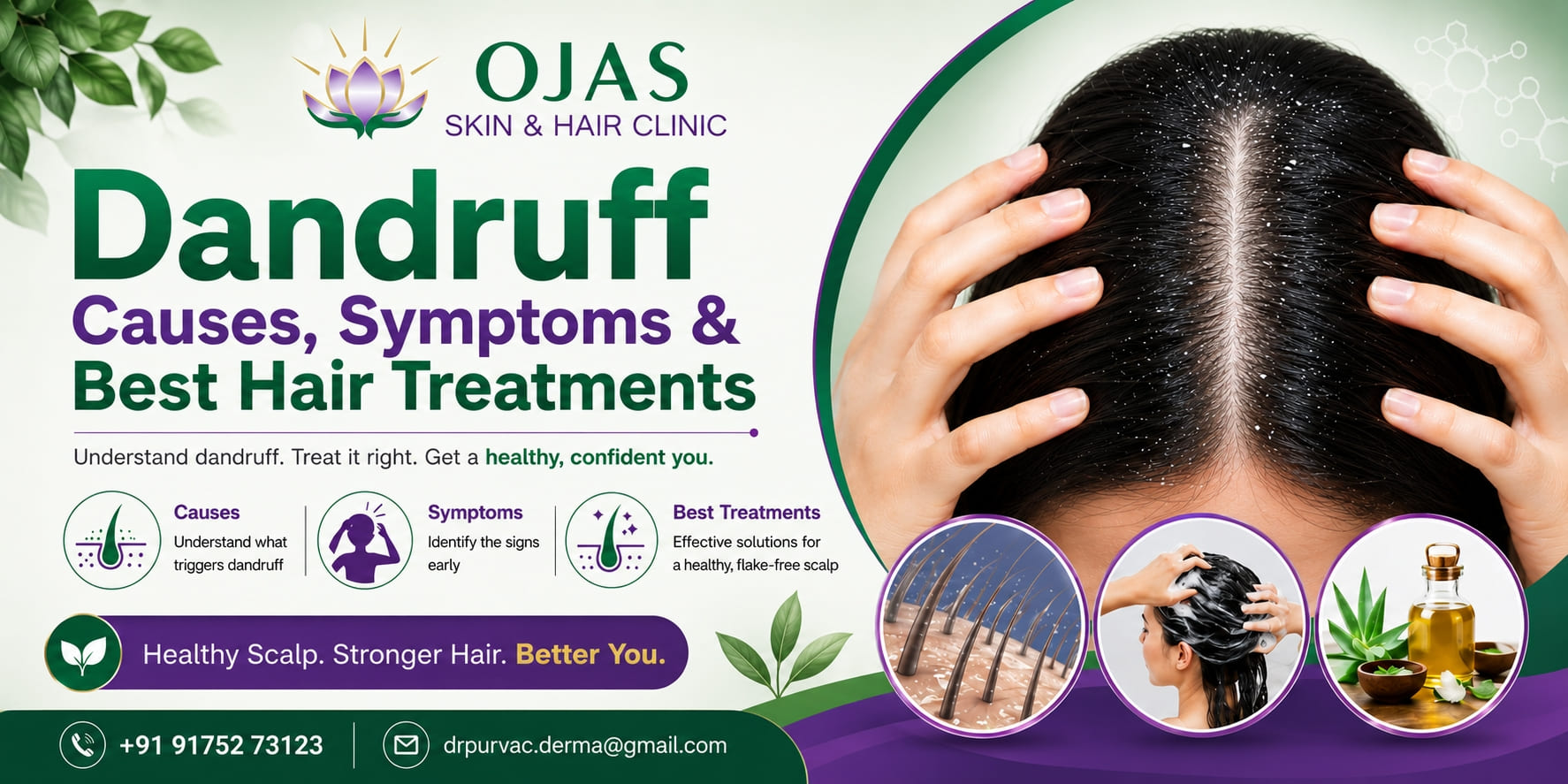
Dandruff is one of the most common scalp concerns affecting both men and women. While many people think dandruff is simply caused by dry skin, the reality is much more complex. It can be triggered by fungal overgrowth, excess oil production, poor scalp hygiene, skin conditions, stress, hormonal changes, and environmental factors. If you've been struggling with white flakes, scalp itching, irritation, or persistent hair fall, it's important to understand the root cause before choosing a treatment. At Ojas Hair & Skin Clinic, we help patients identify the underlying cause of dandruff and recommend customized scalp care solutions that provide long-term relief rather than temporary results.
“Understanding the root cause of dandruff is the first step toward lasting relief. Expert care makes all the difference.” – Dr. Purvaa Chavaan
What is Dandruff?
Dandruff is a scalp condition where dead skin cells shed excessively from the scalp. Mild flaking is normal because the scalp naturally renews itself. However, when this process speeds up, visible white or yellow flakes begin appearing on your hair, shoulders, and clothing. In many cases, dandruff is associated with an overgrowth of Malassezia, a naturally occurring yeast that lives on the scalp. When combined with excess oil production, it can lead to irritation and inflammation. Without proper treatment, dandruff may worsen and contribute to scalp sensitivity, itching, redness, and even increased hair shedding.
Common Causes of Dandruff
Understanding the cause helps determine the right treatment.
1. Oily Scalp
An oily scalp creates the perfect environment for fungal growth, leading to dandruff. Common signs include: Greasy scalp, sticky flakes, bad scalp odor, and hair becoming oily within a day.
2. Dry Scalp
Dry weather, harsh shampoos, and dehydration may cause the scalp to become dry and flaky. Symptoms include: Small white flakes, tight scalp, mild itching, and dry hair.
3. Fungal Overgrowth
One of the leading causes of dandruff is the overgrowth of Malassezia fungus. This fungus feeds on scalp oils and produces substances that irritate sensitive skin.
4. Seborrheic Dermatitis
This is a more severe form of dandruff characterized by: Red scalp, yellow greasy flakes, persistent itching, and scalp inflammation. Professional treatment is often required.
5. Product Build-Up
Using excessive styling products may clog hair follicles and cause scalp irritation. Products include: Hair sprays, hair wax, dry shampoo, hair gels, and oils not washed properly.
6. Poor Hair Washing Routine
Infrequent shampooing allows oil, sweat, and dead skin cells to accumulate. This increases dandruff and scalp itching.
7. Stress
Research continues to show that chronic stress affects immune function, making dandruff flare-ups more frequent.
8. Hormonal Changes
Hormonal fluctuations during puberty, pregnancy, or adulthood may increase scalp oil production.
9. Skin Conditions
Certain skin diseases can resemble dandruff, including: Psoriasis, Eczema, Contact dermatitis, and Scalp fungal infections. A qualified dermatologist or hair specialist should evaluate persistent symptoms.
Common Symptoms of Dandruff
People experience dandruff differently depending on the severity. Typical symptoms include:
- White flakes on clothing
- Yellow greasy flakes
- Persistent itching
- Red scalp
- Irritated scalp
- Dry scalp
- Scalp tenderness
- Hair fall due to scratching
- Scalp odor
- Oily scalp
Ignoring these symptoms may worsen scalp health over time.
Can Dandruff Cause Hair Loss?
One of the biggest myths is that dandruff directly causes baldness. The truth is: Dandruff itself doesn't permanently damage hair follicles. However, severe dandruff causes constant scratching, scalp inflammation, follicle irritation, weak hair roots, and temporary hair shedding. Treating dandruff early helps maintain a healthier scalp environment for hair growth.
Best Dandruff Treatments
Modern scalp treatments focus on addressing the underlying cause instead of simply removing flakes.
Based on your scalp condition and diagnosis, your doctor may recommend a medicated anti-dandruff shampoo to help control dandruff, reduce excess oil, relieve itching, and promote a healthier scalp.
Before beginning treatment, many hair specialists perform a scalp examination to determine: Oil levels, scalp sensitivity, fungal infection, follicle health, and product build-up. This helps create a personalized treatment plan.
Professional scalp detox sessions remove dead skin, oil build-up, pollution particles, and product residue. This improves scalp hygiene and enhances the effectiveness of topical treatments.
For dry scalp-related dandruff, hydration treatments restore the scalp's moisture barrier while reducing irritation and itching.
Moderate to severe dandruff may require prescription antifungal lotions, corticosteroid solutions, anti-inflammatory medications, or oral medications in selected cases. These should always be used under medical supervision.
Healthy habits support scalp health: Wash hair regularly, manage stress, eat protein-rich foods, drink enough water, avoid harsh chemicals, clean combs regularly, and avoid sharing towels.
Home Remedies: Do They Really Work?
Several natural remedies may help mild dandruff, although evidence varies and they may not work for everyone. Popular options include: Tea tree oil (properly diluted), Aloe vera gel, Coconut oil (for dry scalp only), and Apple cider vinegar (use cautiously and diluted). Avoid applying undiluted essential oils or harsh ingredients, as they may irritate the scalp. If dandruff persists for more than a few weeks, consult a qualified hair specialist instead of relying solely on home remedies.
When Should You Visit a Hair Specialist?
Seek professional care if you experience:
- Dandruff lasting more than one month
- Severe itching
- Bleeding due to scratching
- Hair fall
- Red patches
- Thick yellow scales
- Recurrent dandruff despite using medicated shampoo
- Scalp infection
- Painful scalp
Early diagnosis prevents complications and helps restore scalp health more effectively.
Tips to Prevent Dandruff
You can reduce the risk of recurring dandruff by following these habits:
- Wash your scalp regularly based on your hair type.
- Avoid excessive use of styling products.
- Eat a balanced diet rich in vitamins, zinc, iron, and protein.
- Manage stress through regular exercise or relaxation techniques.
- Keep pillow covers, combs, and towels clean.
- Protect your scalp from excessive sun exposure.
- Avoid scratching your scalp.
- Use hair care products suitable for your scalp condition.
Consistency is key to maintaining a healthy scalp.
Why Choose Ojas Hair & Skin Clinic?
At Ojas Hair & Skin Clinic, we believe that effective dandruff management begins with an accurate diagnosis. Every scalp is unique, which is why our treatment plans are personalized based on the individual's condition, lifestyle, and hair care habits. Our approach includes: Comprehensive scalp evaluation, customized dandruff treatment plans, advanced scalp therapies, medical-grade hair care recommendations, and follow-up consultations to monitor progress. Whether you are dealing with occasional flakes or chronic scalp irritation, our team is committed to helping you achieve a healthier scalp and stronger hair.
Frequently Asked Questions (FAQs)
1. What is the best dandruff treatment in Hadapsar?
The best treatment depends on the underlying cause. Persistent dandruff should be evaluated by a hair specialist who can recommend appropriate medicated shampoos, scalp therapies, or prescription treatments.
2. When should I consider a scalp treatment in Pune?
If you have ongoing itching, excessive flaking, scalp redness, or hair fall despite using over-the-counter products, a professional scalp assessment and treatment may be beneficial.
3. Can dandruff cause permanent hair loss?
No. Dandruff itself does not typically cause permanent hair loss, but prolonged inflammation and excessive scratching can contribute to temporary hair shedding.
4. What is the best itchy scalp treatment?
Treatment depends on whether the itching is caused by dandruff, dry skin, allergies, fungal infection, or another scalp condition. A proper diagnosis is important for effective treatment.
5. How often should I wash my hair if I have dandruff?
Most people with dandruff benefit from washing their hair two to three times a week using a suitable medicated or dermatologist-recommended shampoo, though the ideal frequency depends on your scalp type.
6. How do I find a reliable hair specialist near me?
Choose a qualified clinic with experienced dermatologists or trichologists, personalized treatment plans, and positive patient reviews. If you are in Hadapsar or Malwadi, Ojas Hair & Skin Clinic offers comprehensive scalp and hair care services.
Conclusion
Dandruff is more than just a cosmetic issue—it can affect your confidence, scalp health, and overall hair quality. Identifying the underlying cause is essential for choosing the right treatment and preventing recurrence. If you are experiencing persistent flakes, itching, or scalp irritation, don't ignore the symptoms. Professional evaluation and personalized care can make a significant difference in achieving long-term scalp health. At Ojas Hair & Skin Clinic, we are dedicated to providing evidence-based scalp and hair treatments tailored to your individual needs. Whether you're looking for dandruff treatment in Hadapsar, scalp treatment in Pune, itchy scalp treatment, a hair specialist near me, or a hair clinic in Malwadi, our team is here to help you regain a healthy, flake-free scalp.
Book Your Appointment Today
Say goodbye to dandruff and hello to a healthier scalp. At Ojas Hair & Skin Clinic, we provide expert care for all your scalp and hair concerns.
Visit Our WebsiteClinic URL: https://www.ojashairandskin.com/
Contact us today – +91 91752 73123.